What Christina L. Glancy Taught Me About Owning My Power
A Vibe Connect session on positioning turned into a rethink of what a career actually adds up to.

Aug 27, 2026 · 6 min read
I recently had Christina L. Glancy join us for a Vibe Connect session on positioning your power. I expected the conversation to mostly be about personal branding, communicating your value, and figuring out how to position yourself when you’re building something of your own.
Instead, I walked away thinking about my entire career differently.
My career has never been linear. I’ve worked across finance, risk, consulting, product, marketing, AI, education, community building, and entrepreneurship. For a long time, I treated those as different chapters. Christina introduced a concept during our conversation that made me realize they might actually be parts of the same thing.
She calls it your personal enterprise.
The idea is that your career is bigger than the company you work for or the title you currently have. Your skills, relationships, reputation, processes, knowledge, and experiences are assets that continue moving with you even after a particular role ends.
That really resonated with me because I’ve worked at recognizable companies where the name itself gives you credibility. It’s easy to introduce yourself through the company rather than through what you’re actually capable of doing. But eventually the job ends, the contract ends, you pivot, or you decide to build something yourself, and you’re forced to figure out who you are without that logo next to your name.
One thing Christina said during the session stuck with me: you may lose the role, but you don’t lose the process.
When I look at my own career through that lens, the pivots make more sense. My background in risk still influences how I think about AI because I’m naturally thinking about controls, accountability, and what happens when systems fail. Consulting taught me how to walk into ambiguous situations and create structure. Product taught me how to take an idea and turn it into something useful. Marketing taught me how to communicate why something matters, and teaching has forced me to become better at explaining complicated ideas to people who are encountering them for the first time.
None of those experiences replaced each other. They built on each other.
Christina was also clear that this doesn’t mean everything you worked on inside a company suddenly becomes yours. Employment agreements, NDAs, and intellectual property still matter. Her point was more about recognizing the transferable judgment, knowledge, and processes you’ve developed along the way.
Influence isn’t just posting online
Another framework Christina shared was:
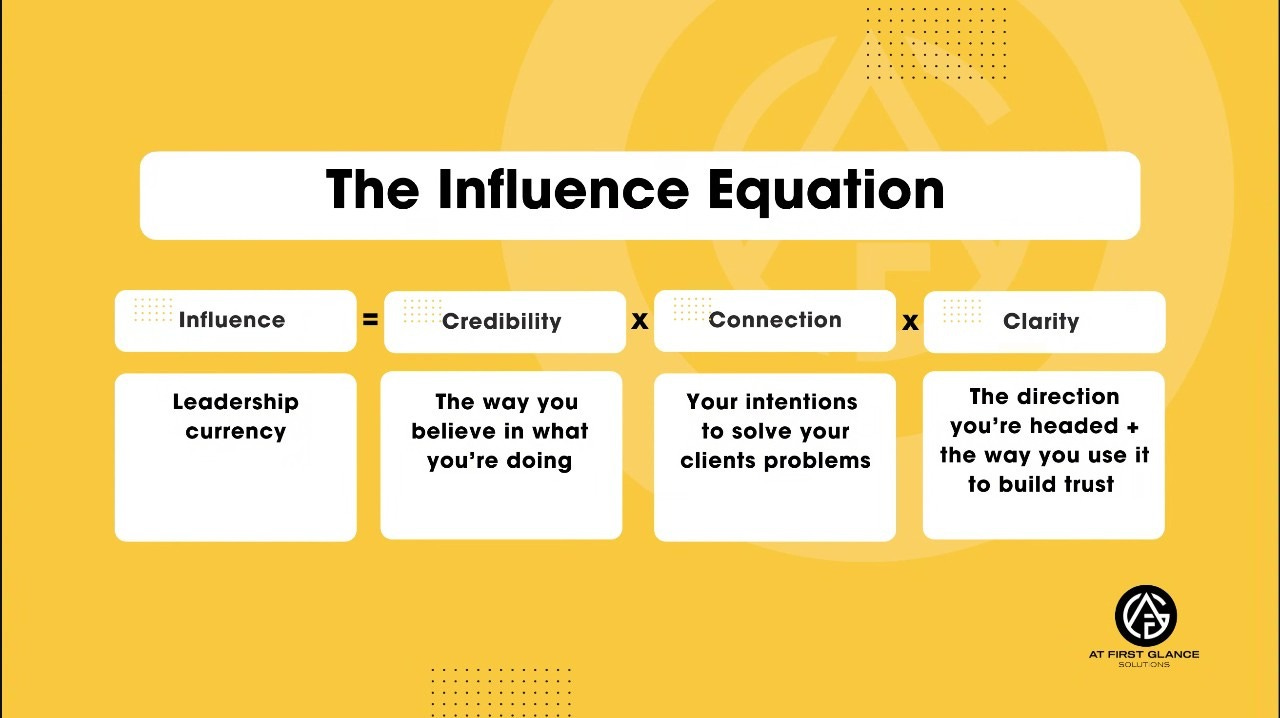
Influence = Credibility × Connection × Clarity
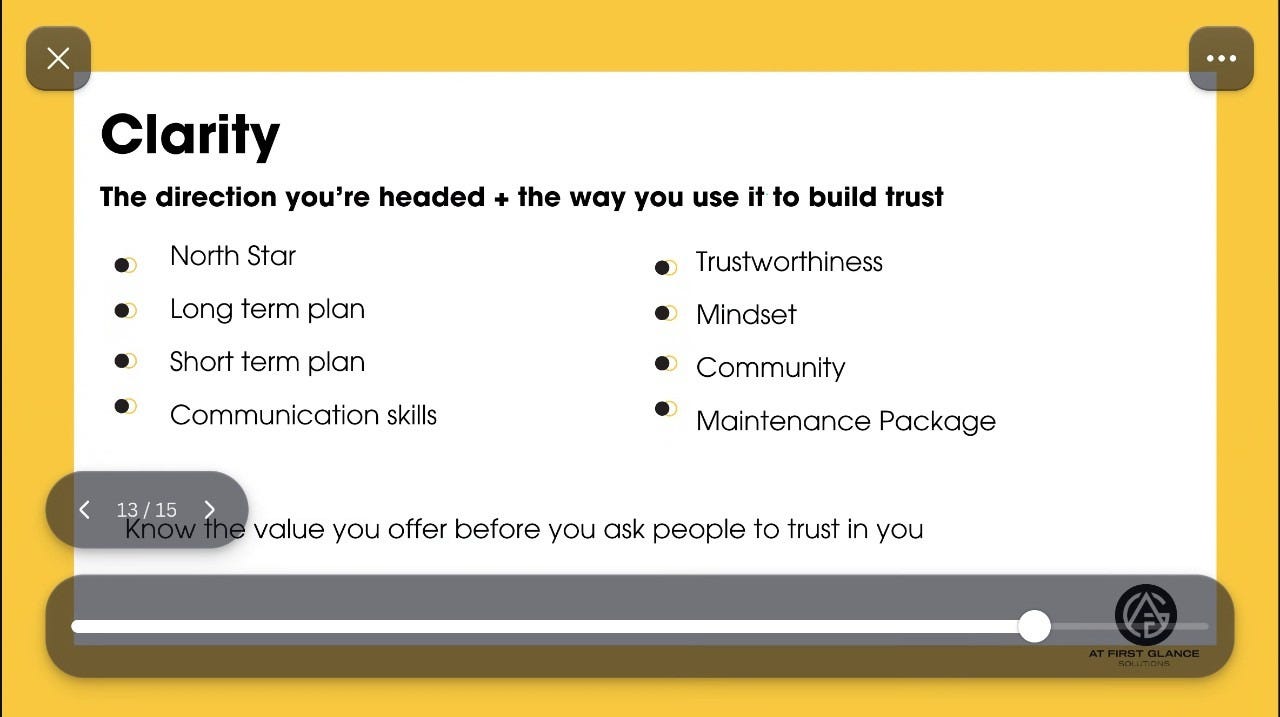
Credibility is why people believe you can do the work. Connection is your relationship with the people and problems you care about. Clarity is whether people actually understand what you do and where you’re going.
What made this interesting was that Christina used me as an example.
Before the session started, I was welcoming people into the room like I normally do. I recognized people who had attended previous Vibe Connect events and noticed the people who were joining for the first time. Christina brought that up as an example of connection. She could see that the community wasn’t just something written in my bio. There was an actual relationship with the people showing up.
I appreciated that because it made me reconsider how we talk about personal branding.
Post more or increase your rep?
We’re constantly told to post more, optimize our profiles, create better hooks, and establish ourselves as experts. All of that can be useful, but your reputation is also being built when you’re not posting anything. It’s how you treat people, whether you remember them, whether you follow through, and whether the person someone meets offline feels like the same person they’ve been following online.
That kind of influence is much harder to manufacture.
Don’t build something you need to escape from
The last part of Christina’s conversation that stayed with me was her reason for building her own company in the first place.
After experiencing corporate burnout, she didn’t want to leave corporate life only to recreate the same conditions as an entrepreneur. She talked about wanting slow mornings, being able to take vacations without stressing over the bill, and ultimately building a life she didn’t need to escape from.
I connected with that because I like having a lot going on. I like building products, teaching, experimenting with ideas, working with clients, and bringing people together. Most of the time, I genuinely enjoy the chaos that comes with it.
But enjoying your work doesn’t automatically make the way you’re working sustainable.
Toward the end of the session, Christina introduced the idea of a business maintenance package. She compared it to maintaining a car or protecting something valuable with a warranty. If we expect something to last, we maintain it. Yet founders don’t always define what maintenance looks like for themselves or their businesses.
That might mean being clearer about what deserves your time, how many projects you can realistically take on, which opportunities actually align with where you’re going, and what you need from the business beyond revenue.
I’m still figuring out what that looks like for me. I know that I enjoy being able to move between building products, teaching, community, and working with people on ideas I find interesting. At the same time, I don’t want to become so busy building that I accidentally recreate the type of working life I was trying to move away from in the first place.
I think that’s what stayed with me most from my conversation with Christina. I went into it thinking about how we position ourselves to everyone else, but I left thinking about whether I’m clear on my own positioning first.
When I look back at my career now, finance, risk, consulting, product, marketing, AI, teaching, community building, and entrepreneurship don’t feel like a collection of random pivots. They feel more connected than I probably realized while I was going through them. Each experience gave me something that I carried into the next one, and Christina’s idea of a personal enterprise gave me language for understanding that.
I’m not necessarily thinking about what my next title should be anymore. I’m thinking more about what I want all of these experiences to add up to, what I want to continue carrying with me.
Founder & Editor
Founder of Vibe Connect. Writes about AI, risk, product and building community.